Good practices for k8s ⚙️
Did you know 86% of organizations have known vulnerabilities deployed in their software? In many cloud attack incidents, intruders access data and disturb...
Bifrost Team
bifrost security
Did you know 86% of organizations have known vulnerabilities deployed in their software?
In many cloud attack incidents, intruders access data and disturb operations through these weaknesses.
Let’s examine good practices for Kubernetes to reduce the risk of your containerized applications being targeted.
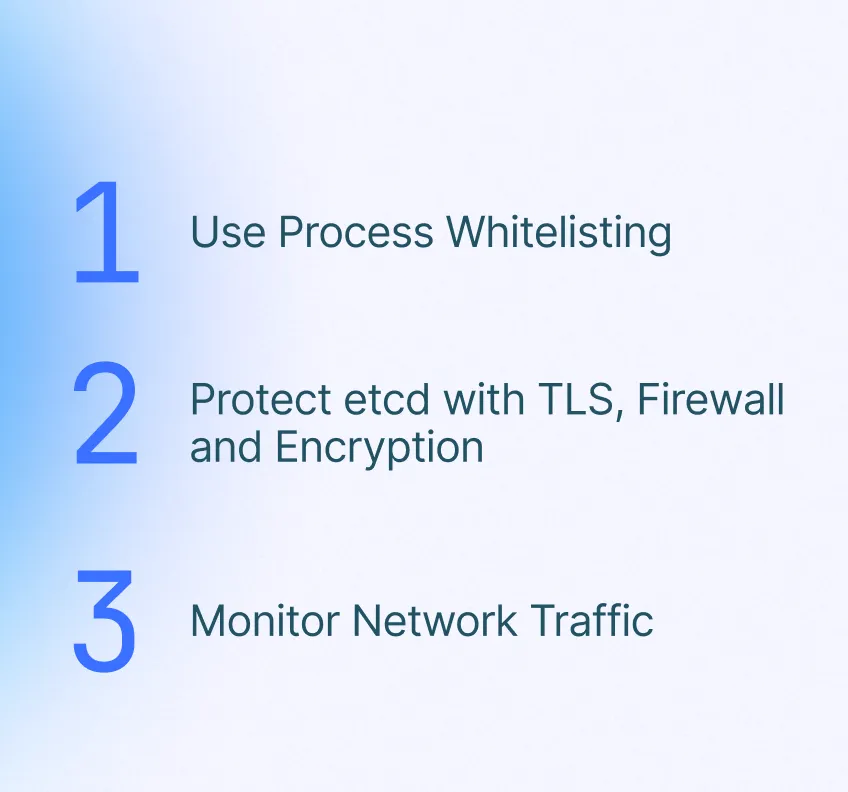
💡 Use Process Whitelisting
Whitelisting is effective in identifying unexpected running processes. The application is observed to identify all processes running during normal application behavior. This is used as your whitelist for future application behavior. Methods such as LSMs automatically and continuously tailor security measures for each build.
💡 Protect etcd with TLS, Firewall and Encryption
etcd is a critical component in Kubernetes, storing the state of the cluster and its secrets, making it a prime target for attackers. If unauthorized users gain access to etcd, they could potentially take control of the entire cluster, leading to significant security breaches. By securing etcd with strong access controls, encryption, and firewalls, you can prevent attackers from exploiting these weaknesses in your software.
💡 Monitor Network Traffic to Limit Communications
Containerized applications rely heavily on cluster networks. Monitoring and comparing active network traffic with Kubernetes network policies helps identify abnormal communications. This process also reveals unused network policies, removing these unnecessary connections reduces the attack surface of your applications.
Tags
Ready to see runtime security in action?
bifrost automatically generates tailored security profiles for your containers and cuts CVE noise by up to 90%. Free trial, no credit card required.