The Role of Linux Security Modules
Linux powers everything from cloud servers to smart devices. With so much depending on it, robust security is a must — and that’s where **Linux Security...
Bifrost Team
bifrost security
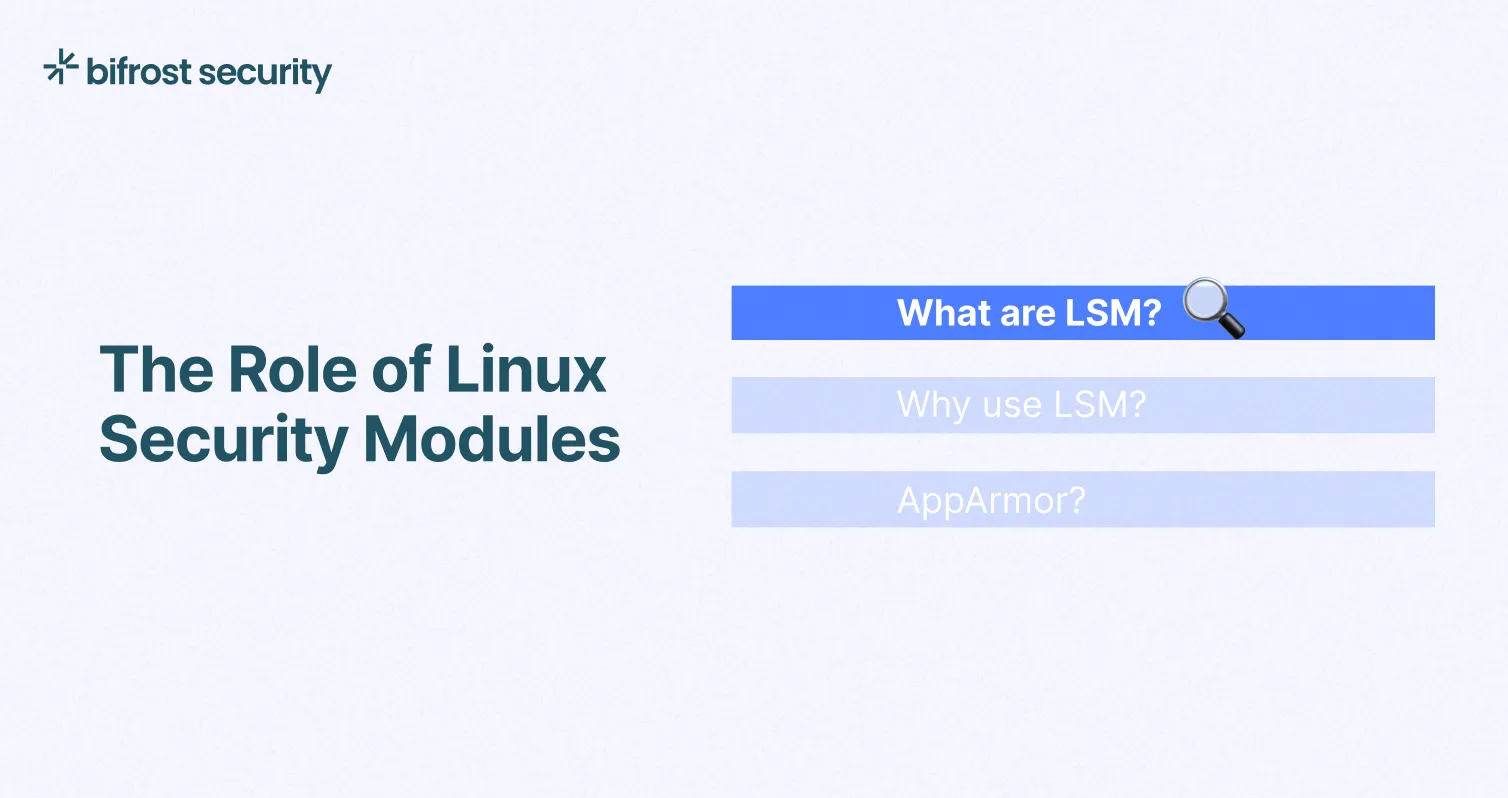
Linux powers everything from cloud servers to smart devices. With so much depending on it, robust security is a must — and that’s where Linux Security Modules
step in.
🔍 Ms?
LSMs are built-in security frameworks in the Linux kernel that give you fine-grained control over what applications can access. Think of them as an extra layer of defence closest to the application core.
⚙️ Why Use LSMs?
Using Linux Security Modules (LSMs) to lock down a containerised workload adds a crucial layer of defence by enforcing strict, kernel-level access controls. Containers share the host kernel, so a compromised container can pose a risk to the entire system. LSMs like AppArmor or SELinux let you define precisely what a containerised process can access—files, network, and syscalls—reducing the blast radius of a breach and helping enforce the principle of least privilege.
🚀 Spotlight on AppArmor
One of the most popular LSMs is AppArmor, which uses profiles to define how programs can interact with files, networks, and other system resources.
AppArmor helps:
✅ Prevent unauthorised access to sensitive files
✅ Limit what apps are allowed to do
✅ Maintain consistent, easy-to-understand security rules
Want to learn how your organisation can benefit from LSMs?
Tags
Do you know what's exploitable in your environment?
Deploy bifrost via Helm and it reads how every container is actually deployed, cutting your CVE list before a single line of code changes.